Over the past 10 years, the UK bar scene has unquestionably cemented itself as the torchbearer for contemporary European cocktail culture. If Europe's cocktail crown were ever up for debate, 2026 should put it firmly to bed.
The UK bar scene has unquestionably cemented itself as the torchbearer for contemporary European cocktail culture. Yes, France has Paris and Marseille; Spain has Barcelona and Madrid; Portugal has Lisbon and Porto. But land yourself anywhere in the UK – Liverpool or Bristol, Brighton or Cardiff, Leeds or Glasgow – and you're almost guaranteed access to cocktail bars that can genuinely hold their own on a global stage.
We like a good drink. But more importantly, we like a really good drink.
Having moved to Valencia last year, I've spent a huge amount of time in provincial cities across Southern Europe. Each has its own rhythm, rituals, and deeply rooted food and drink culture. Yet it's my regular trips back to the UK that continue to be my biggest source of cocktail inspiration and excitement.
Not because British bars are louder or more theatrical – but because they're thinking critically about what modern drinking looks like, and how cocktails fit into that picture.
A quiet recalibration
2026 marks a moment of subtle but meaningful recalibration. The past decade taught us technical perfection, hyper-seasonality, and boundary-pushing form. Those skills are now assumed. What comes next is refinement.
2026 is bringing more attention to flavour, storytelling, sustainability, and how cocktails are experienced – not just consumed.
With such a progressive cocktail culture, this shift feels especially pronounced in the UK. The cost-of-living crisis, post-pandemic reassessments of hospitality, and a new generation of drinkers with very different expectations have all converged.
Cocktails, once aspirational objects of luxury, are becoming vessels for meaning, memory, and approachability. The best bars aren't simply responding to trends; they're shaping them through flavour clarity, cultural context, and emotional resonance.
Crucially, this evolution isn't confined to the capital.
Seasonality without sermonising
Seasonal and local ingredients haven't disappeared from the UK bar scene—but their role has changed significantly. Rather than being marketed as ideology or novelty, seasonality is now an assumed marker of quality.
Bartenders let it speak quietly through execution: shorter menus, rotating garnishes, subtle tweaks to builds that signal time and place without explanation.
In Leeds, Below Stairs exemplifies this approach. Its menus are concise and disciplined, allowing sourcing and seasonality to underpin the experience without dominating it.
Similarly, in Edinburgh, Bramble continues to showcase how ingredient-driven cocktails can feel timeless rather than trendy—seasonality expressed through balance rather than messaging.
There's also a pragmatic acceptance that absolute locality isn't always realistic. British herbs, berries, and hedgerow ingredients are still celebrated, but most bars now balance regional sourcing with operational sense, accepting citrus and other staples while expressing local identity elsewhere in the drink. Fermentation, preservation, low-waste prep, and whole-ingredient usage allow seasonal produce to stretch further without compromising creativity.
Flavour clarity over cleverness
Perhaps the most defining shift in flavour for 2026 is restraint. Across the UK, bars are stepping away from shock-value combinations and returning to clarity – drinks that make immediate sense, but reward repeat visits.
Savoury, saline, and umami elements are no longer novelties; they're structural tools. Olive oil, miso, mushroom reduction, tomato water, seaweed saline—these ingredients are now used to deepen and balance, particularly in food-led venues where cocktails must hold their own alongside assertive kitchens.
In Manchester, Speak in Code has long demonstrated how layered flavour doesn't need to feel busy. Drinks remain composed and deliberate, even when employing unconventional ingredients.
Sweet-and-spicy has also matured. Ginger, chilli, peppercorn, and warming spice now appear as integrated components rather than headline gimmicks. Many bars offer multiple expressions of heat – syrup, tincture, shrub – across a single template, giving guests choice without menu sprawl.
Narrative-first menus
If flavour has sharpened, storytelling has softened. Technical explanations have given way to narratives rooted in memory, emotion, and culture. Guests are invited into the story rather than asked to decode it.
In Edinburgh, Panda & Sons remains a masterclass in playful storytelling that doesn't undermine quality. Familiar flavour references, nostalgia, and humour provide an entry point, while serious technique operates quietly in the background.
Similarly, Tayer + Elementary remains technically ambitious while presenting its drinks with an immediacy that makes complexity feel effortless. Guests don't need to understand the build to understand the drink.
Across the country, narrative-first menus are outperforming scattershot creativity. Fewer drinks, each with a clear editorial lens – whether ingredient, region, or mood – create better recall and stronger guest engagement. A useful barometer for 2026 is simple: could this menu exist anywhere else? If yes, it may be time to sharpen the concept.
Sustainability as structure, not slogan
Sustainability has finally grown up. In 2026, it's less about what's announced and more about what's embedded. Bars are reducing SKUs, streamlining prep, and designing menus that make sense for staff as well as guests.
The minimalist, high-volume elegance of Swift remains a textbook example of how sustainability, scalability and innovation can coexist across a multiple site concept.
Outside London, this has often been driven by necessity rather than messaging. In Sheffield, venues like Public demonstrate that thoughtful systems and restrained menus can coexist with creativity.
Sustainability now operates quietly – but effectively – behind the scenes.
Experience eats everything
Perhaps the most notable shift of all is experiential. Cocktails are no longer isolated moments in a glass; they're part of a wider rhythm. Music, lighting, service style, pacing, and pricing all carry equal weight.
Neighbourhood bars across the UK are leading this movement, prioritising atmosphere and relevance over formality. The Sun Tavern demonstrate how warmth, cultural relevance, and character can elevate technically simple drinks into emotionally rich experiences whilst love it or loathe it, Bunga90 remains one of my most memorable experiences of 2025.
Sports and dive-led venues are also having a reinvention with Bloodsports leading the way. With a major summer of sport ahead—including a FIFA World Cup – beer cocktails are emerging as one of 2026's most socially intelligent formats. Lageritas, shandies with structure, and stout-based reductions offer refreshment without preciousness.
Tiny cocktails, bigger journeys
Echoing the rise of small-plates dining, experience-led cocktail formats are flourishing. Wider adoption of pre-batching has enabled the rise of tiny cocktails – smaller serves delivered faster, fresher, and with narrative flow.
The smartest operators are turning this into opportunity rather than compromise: a tiny cocktail becomes a flight of three, a progression of flavour, perhaps paired with bar snacks. In an era where people may be drinking less, they're often engaging more. Tiny cocktails allow a single order to become a memorable journey rather than a transaction.
No- and low-ABV with confidence
Zero- and low-ABV drinks are no longer apologetic side notes. In 2026, they're judged on flavour architecture, texture, and balance – not alcohol content. Fermentation, verjus, tea reductions, and non-alcoholic aperitifs are used with the same rigour as base spirits.
Crucially, the best bars integrate low- and no-ABV drinks directly into their main menus. Presented with confidence, these options feel like a natural choice rather than a compromise – reflecting how many modern guests actually want to drink.
Final note from the bar
Trends are shorthand for guest mood – and in 2026 that mood favours clarity, provenance, and conviviality.
Whether you're polishing a classic in a neighbourhood bar in Glasgow or designing a match-night beer cocktail menu in Bristol, the winners will be those who treat every element – ingredient, temperature, glassware, music, story – as essential rather than optional.
As 2026 unfolds, the UK bar scene reminds us that progress doesn't always look louder or more complex. Sometimes it looks like refinement.
Cocktails that make sense for the moment we're in. Drinks that tell stories worth hearing. And bars that understand that the future of cocktails isn't just about what's in the glass—but how, where, and why we drink them.
If you think cocktail trends are just about what's in the glass, think again.
Success stories of 2025 will continue into 2026 proving otherwise.

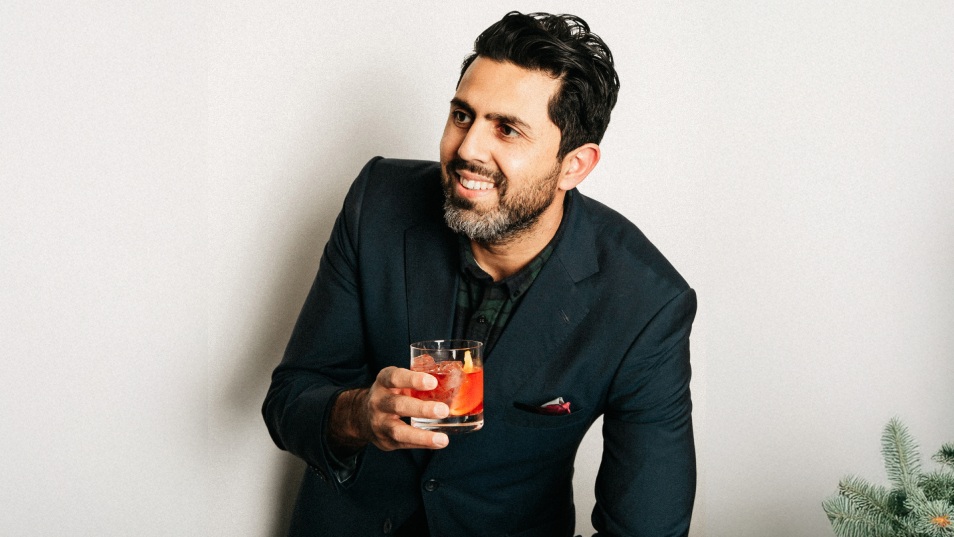
Guest blog: Top 50 Cocktail Bars presenter Pritesh Mody reveals how the UK is setting the bar for Europe’s cocktail future
This year's presenter of the prestigious Top 50 Cocktail Bars, cocktail consultant and creative director at Think Drinks Pritesh Mody shares how the UK's cocktail culture is rewriting the rules of modern drinking.
Tom Easton | 27/01/2026